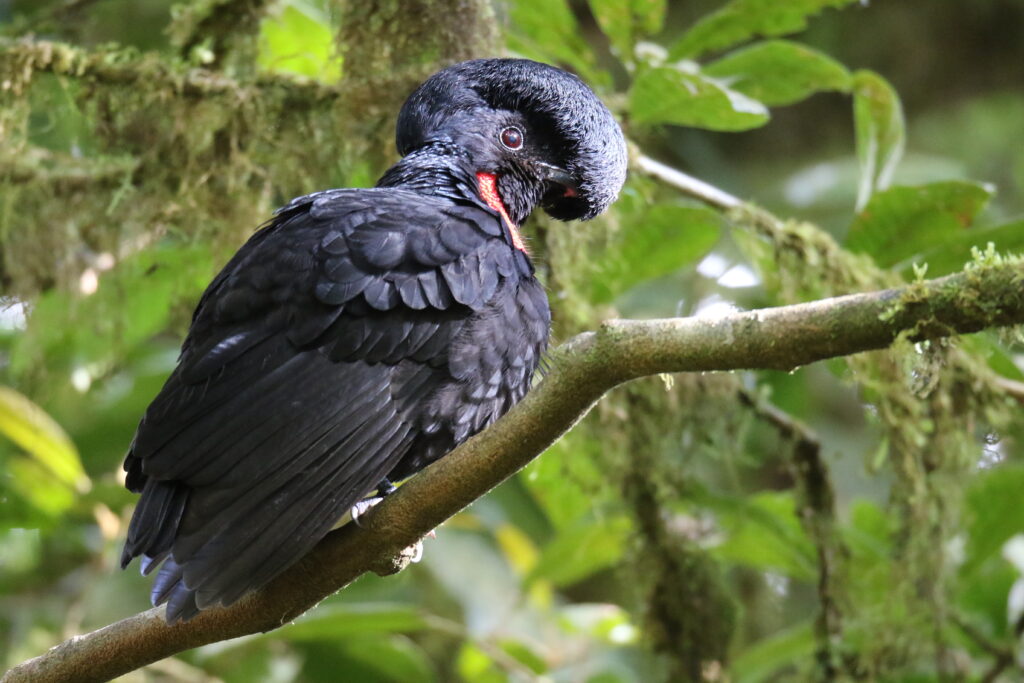
Protecting a severely endangered species requires massive amounts of time, energy, and resources. It demands thinking outside the box and taking drastic measures to ensure their survival. Continuing to do what has always been done and expecting a different outcome is nonsensical. Across the globe, species are vanishing at record rates—heading the way of the Great Auk and the Passenger Pigeon. We are determined to ensure the Bare-necked Umbrellabird does not join that list.
Restoring the Forest: The Seed Project
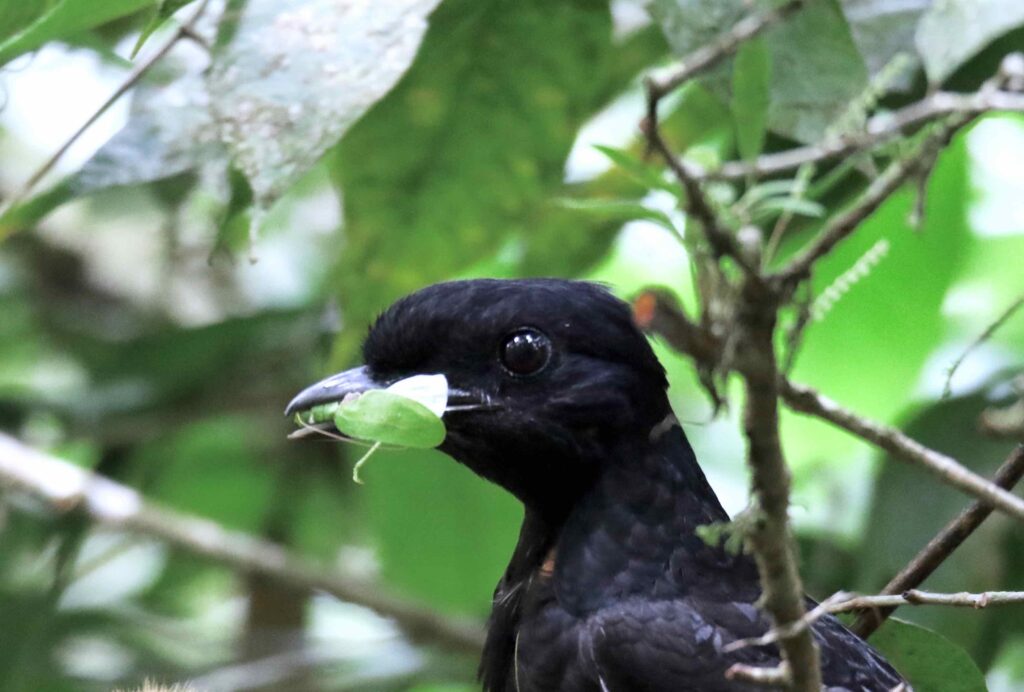
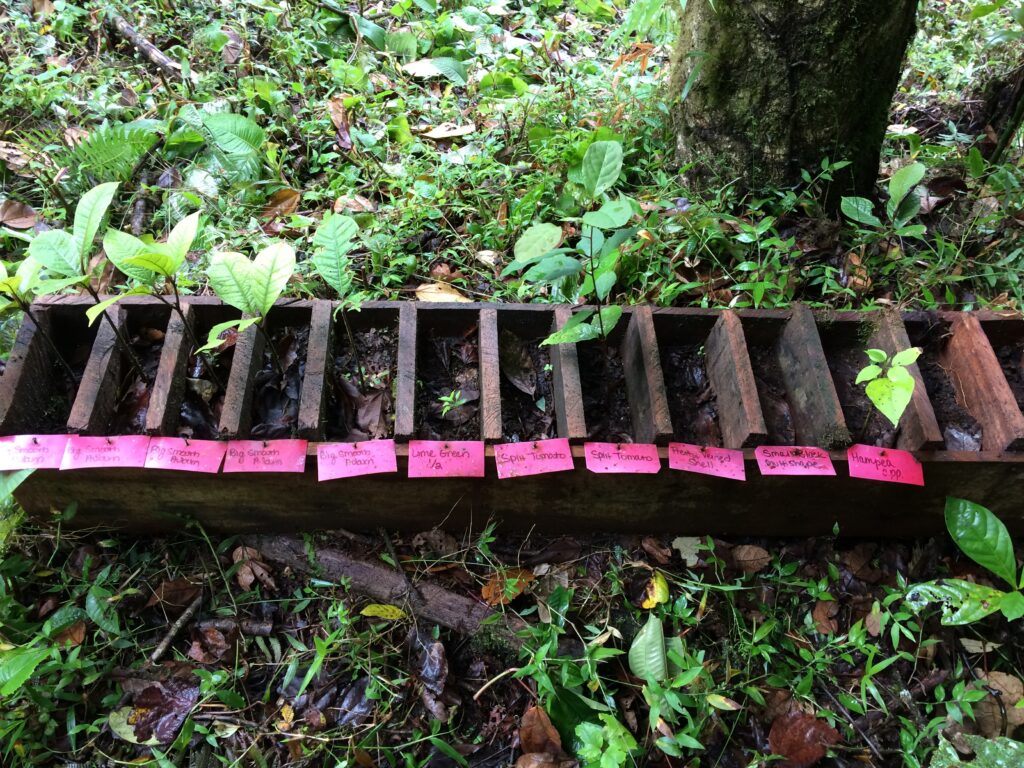
As with so many species, forest destruction and fragmentation in the lowlands is the largest threat to the Bare-necked Umbrellabird. As part of UCAN’s conservation approach, we have collected, cataloged, and replanted thousands of seeds regurgitated by both males and females. Our goal is to positively identify each species of tree these seeds come from and understand which ones germinate best after being processed by the birds.
These seeds are planted in test boxes in a controlled setting to give them the best possible chance at survival. Once established, they are transplanted into strategically located forest edges that are critical for the birds. Creating these “forested islands” and corridors of food sources is a crucial part of reducing the threat of lowland deforestation. While this is a much-needed effort, so much more must be done to restore habitat destroyed over the last few decades.
Genetic Isolation & Population Dynamics
For over 100 years, studies focused almost exclusively on the charismatic males and their lekking behaviors. Until UCAN began its work, the requirements for females—nesting, brooding, and chick-rearing—remained a mystery. By deploying satellite transmitters and color leg bands, we have finally begun to understand their movements and mating strategies.
However, our data suggests a troubling trend: males appear to outnumber females by a very wide margin. With so few birds remaining in isolated pockets of habitat, we must determine the genetic diversity of these populations. UCAN has launched a new study to answer this critical question. In the future, the relocation of younger “bachelor” males between isolated breeding groups may be a necessary step in strengthening the gene pool and aiding the survival of the species.