About Females

About Females

The Phantoms of the Forest

Female Bare-Necked Umbrellabirds are the phantoms of the tropical forests of Costa Rica. Until UCAN began its focused research nearly a decade ago, so little had been observed or documented regarding nests, nesting behavior, eggs, and the raising of chicks by Cephalopterus glabricollis that any resources mentioning these topics all refer back to the same few papers written nearly 35 years ago.

A History of Sparse Data

Sadly, even the data collected on the only nest ever described over three decades ago is brief due to the early failure of the nest from predation just days after the chick hatched. Considering the fact that Costa Rica has a fantastic bird-watching community, a plethora of well-trained guides, and massive numbers of tourists entering national parks and reserves across the country, not seeing Umbrellabirds on a regular basis is a telltale sign their numbers are extremely low.

Groundbreaking Research

Over the years, UCAN has located and collected data on nearly 30 nests, with many being active during UCAN’s decade-long observations. Since nearly all the egg and chick information is new to science, we have been very busy writing papers to be published in the near future. Once this has been accomplished, we will be sharing this new data, images, and videos regarding mating, nesting, brooding, and chicks on this website.

Below you will find general information on the female as well as descriptions of behaviors we have witnessed during our study.


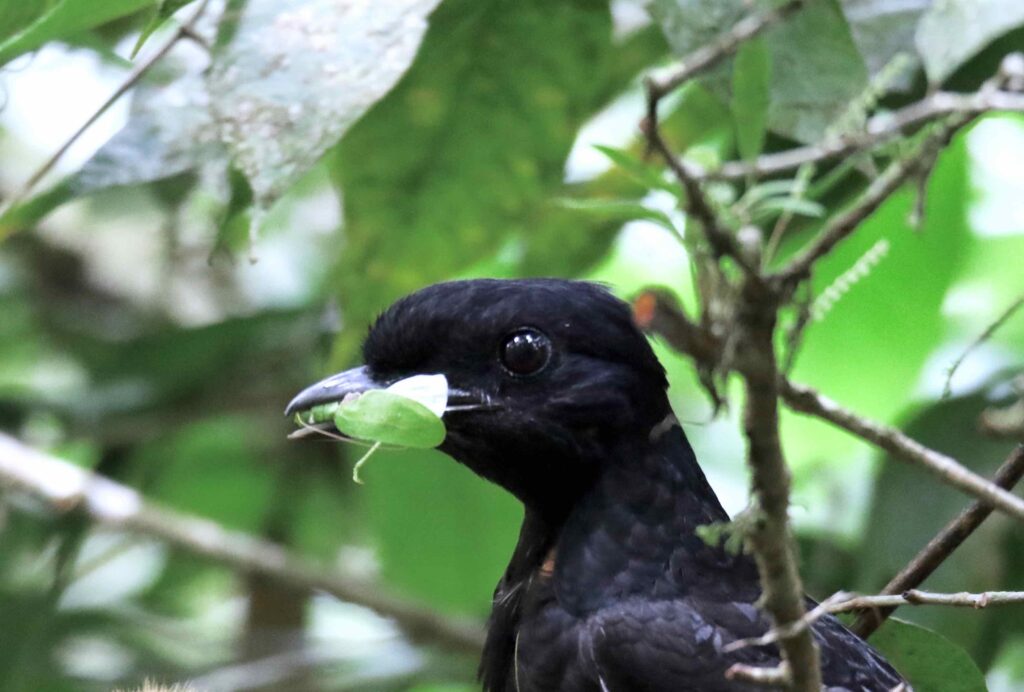
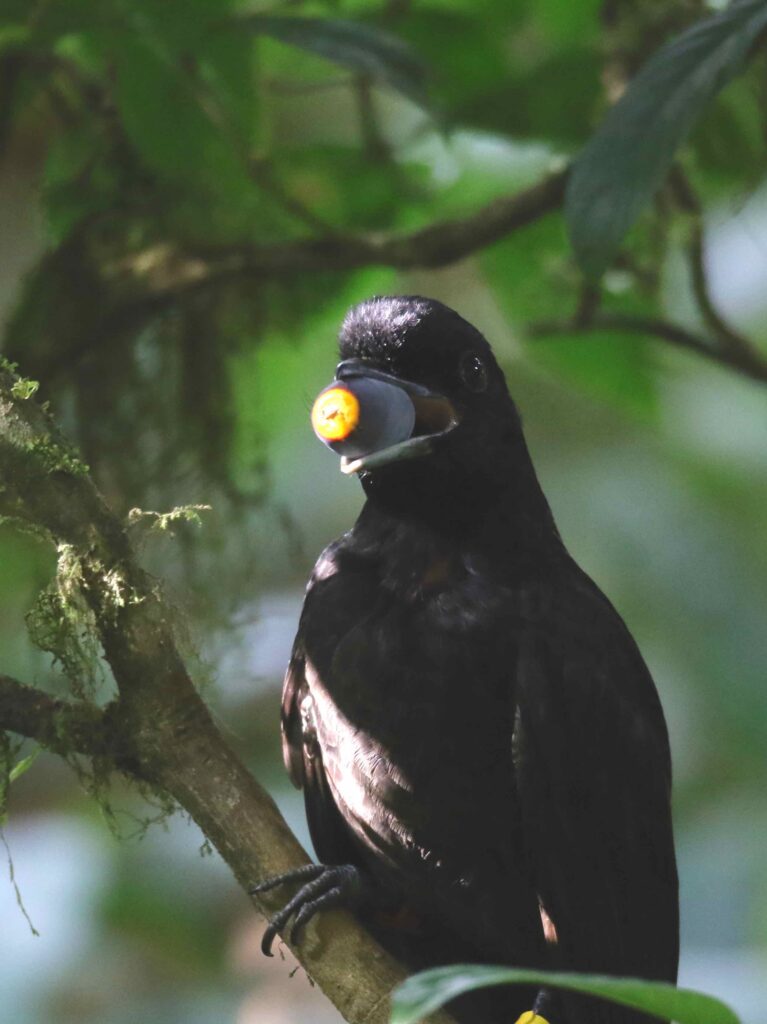
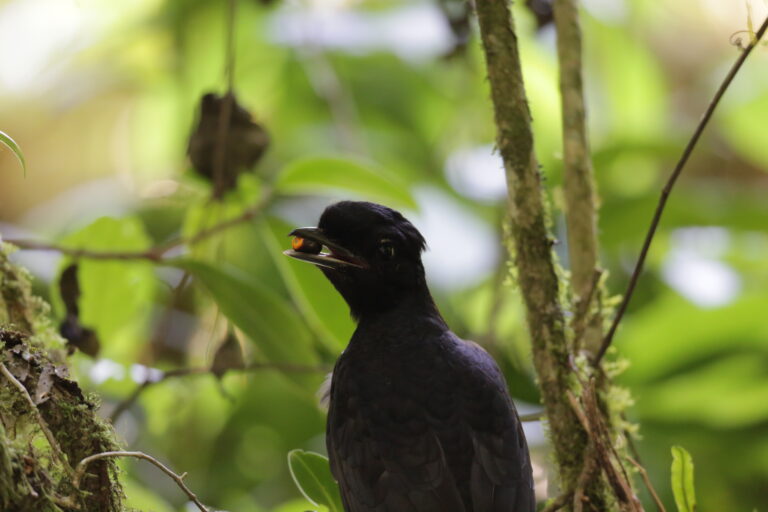
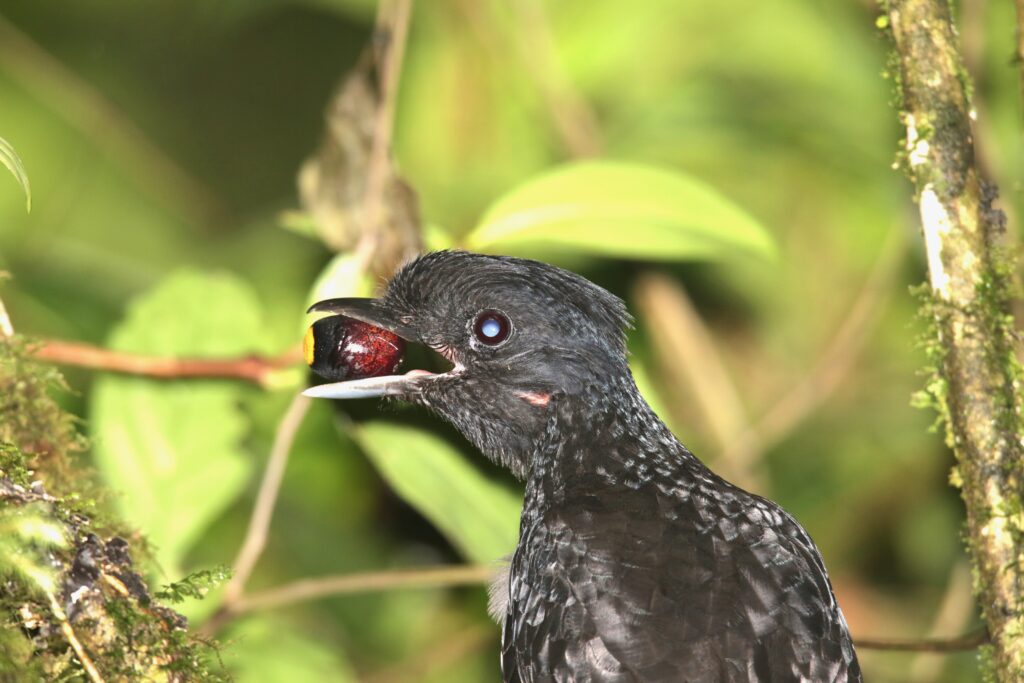
Adult Bare-necked Umbrellabirds are mainly frugivorous and are able to swallow very large fruits. They regurgitate the large pits and seeds playing an important role in keeping the forest diverse.
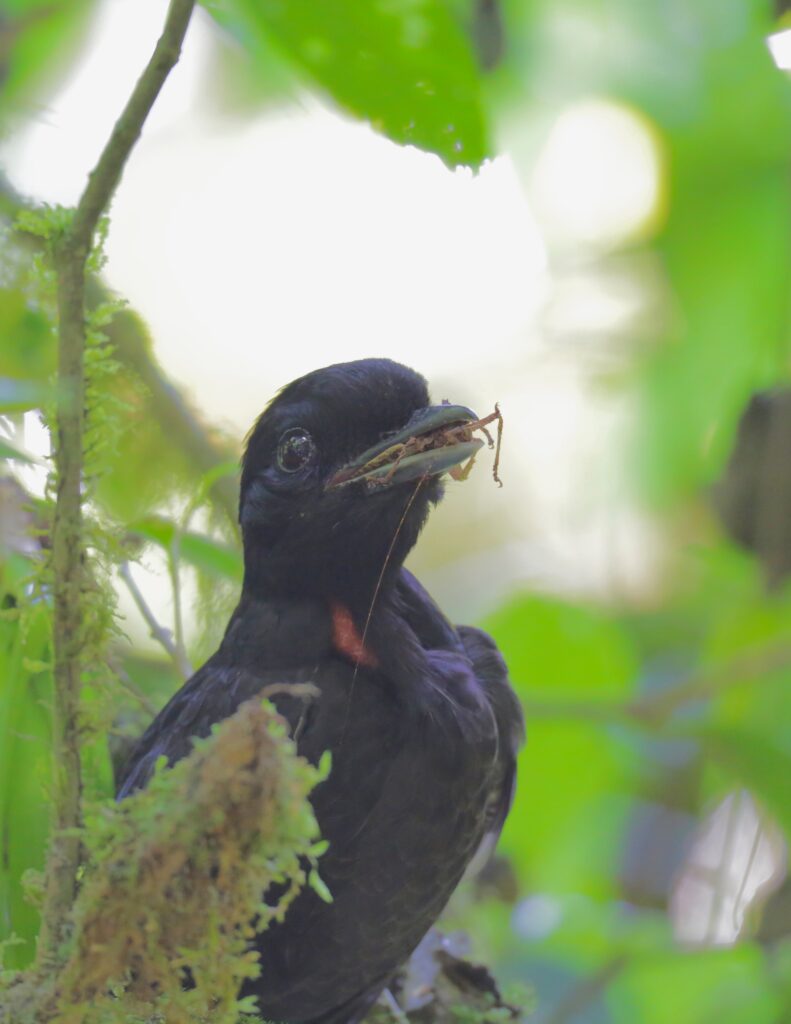
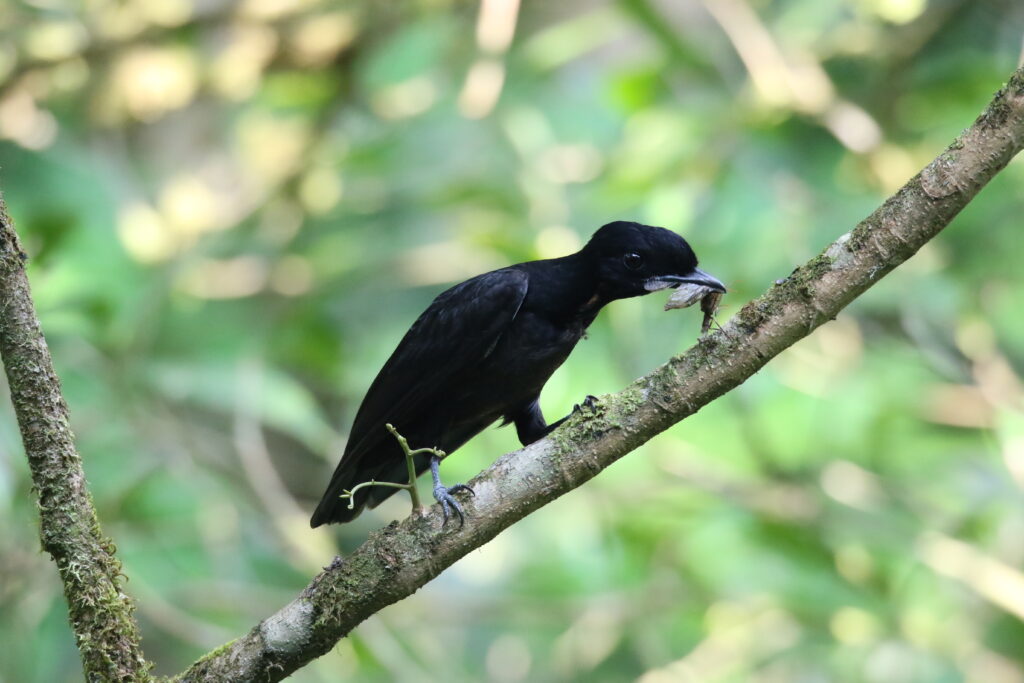
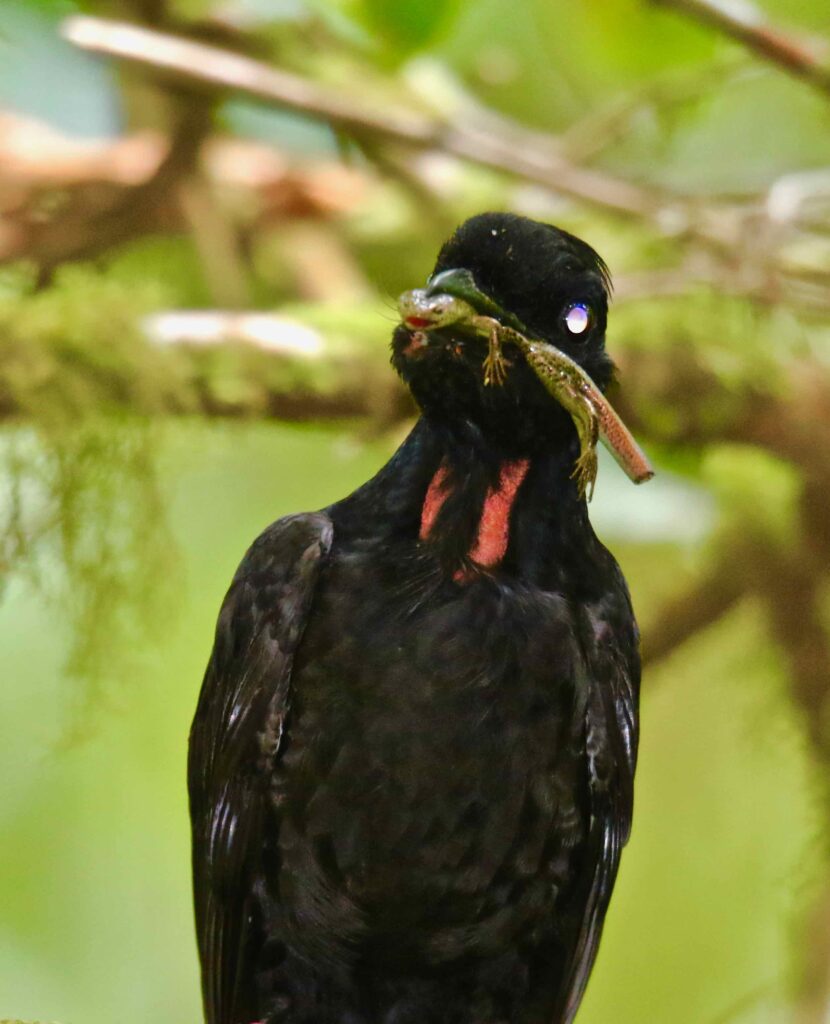
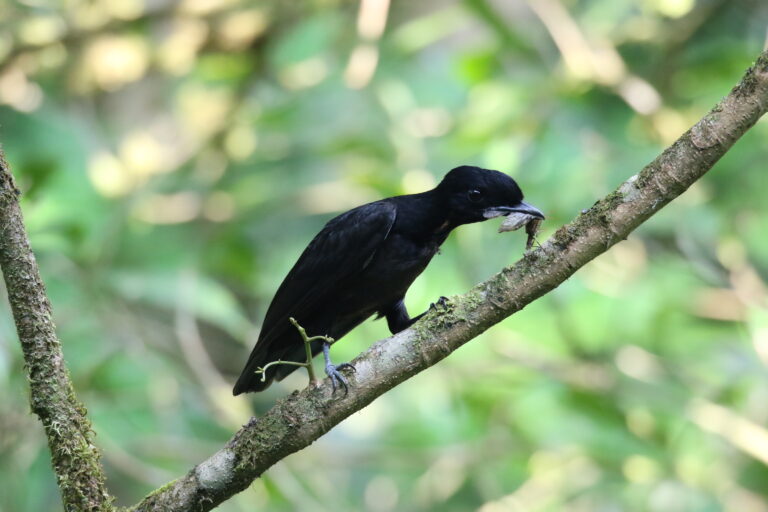
Umbrellabirds will also take insects, frogs, lizards and even snails to augment their diet, especially during nesting as these will be the main food items for the young chick.

The Silent Hunter

As mentioned, females remain mostly silent throughout their lifetime, aside from low calls at the nest and a few throaty distress calls that we have recorded during mating attempts (males can be quite aggressive and competitive). They hunt silently, hopping quickly along branches in pursuit of prey or taking short flights from tree to tree searching for other food items.

Diet and Habitat

Fruits and seeds make up a large part of their diet most of the year, but they will also take lizards, frogs, snails, and even nestlings from other nests. Though primarily a mid-canopy bird of mature forests, we have observed females collecting frogs, insects, and fruits from the ground, as well as in small trees along the edge of secondary forests. At rest, females sit silently, preening and observing their surroundings

How to Find a “Phantom”

The best chance of spotting a female outside of her nesting area is to find a suitable food source and wait. Whenever we start looking for Bare-Necked Umbrellabirds in new terrain, we always follow our ears. If we are lucky enough to hear the loud “BONK” of a Three-Wattled Bellbird (Procnias tricarunculata), we know that is a great place to start. We often find males and females of both species feeding on the same fruits. Although Umbrellabirds tend to be silent at feeding sites, Bellbirds are not. So, follow your ears; you might get lucky and find an Umbrellabird as well.

Identifying the Female

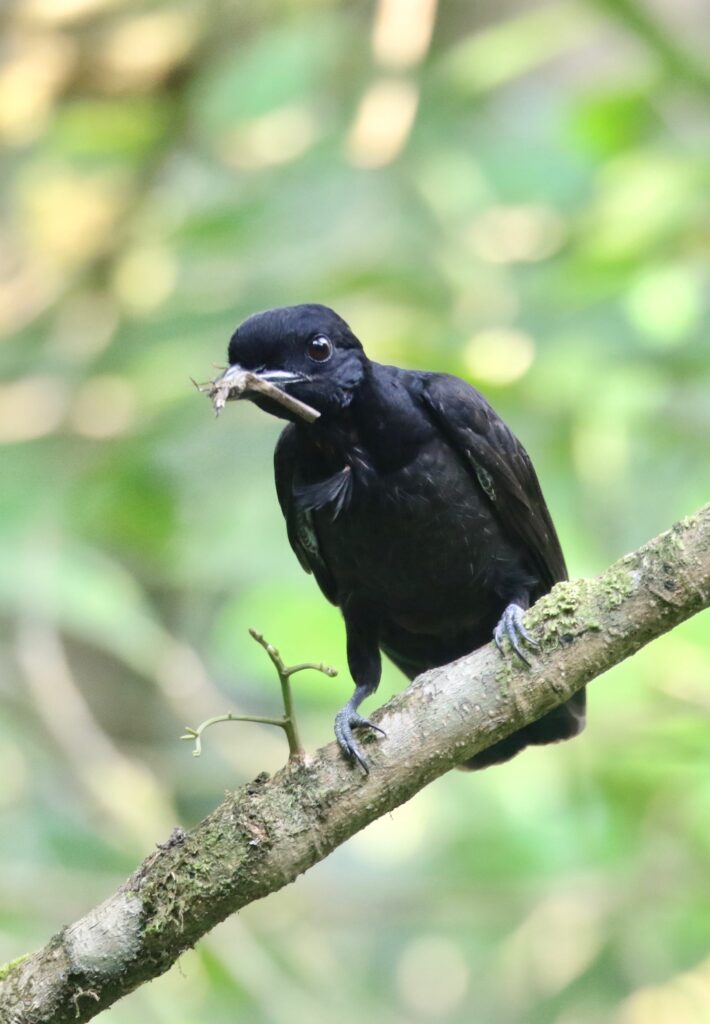
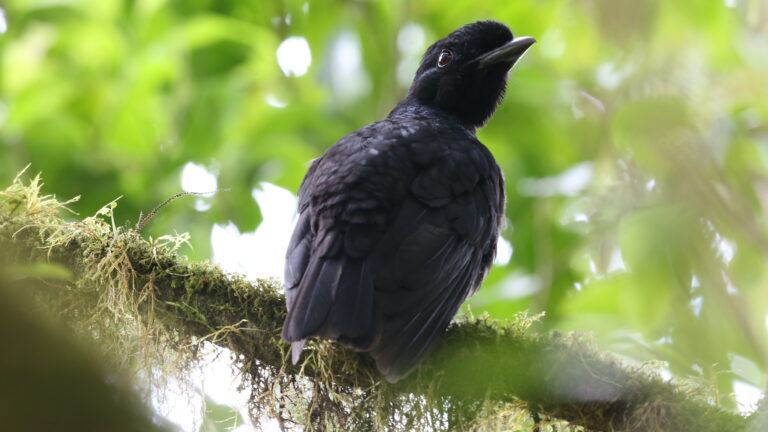
A keen eye is needed to find females in the forest; a very high percentage of those we find are located while in flight. Female Bare-Necked Umbrellabirds are similar in appearance to the males, aside from varying feather arrangements and the fact that the female lacks a well-developed vocal sac. Females are also smaller and lighter than the males, measuring approximately 36–38 cm and weighing around 310–325 grams during the breeding season.

A Distinctive Profile

When flying, Bare-Necked Umbrellabirds show a distinctive profile unlike other birds found in their range, consisting of a very short, square tail and a strange, almost “headless” look in flight due to the heavy crest and short neck. While searching for females in our research area, we have been fooled briefly by a quick glimpse of a trogon, quetzal, or even a Black Guan moving in the thick canopy, as these are the only birds we encounter large and dark enough to consider as a possibility. No doubt our elevated anticipation of finding such an elusive bird helps in the trickery!
Physical Characteristics

Female Umbrellabirds are monotypic, showing no regional variations in appearance. In the hand, females show a beautiful dark-brown eye, a strong, corvid-like bill with small rictal bristles, large, elongated nostrils, and a more brownish belly than the male.

Temperament and Defense

Females are more aggressive than males when first caught in a mist net. They hiss, growl, and snap at anything coming close enough to grab. They have a powerful bite and will often refuse to let go once they have a good hold. They can easily draw blood if they hit their mark by using a repeated twisting and pulling technique with their bill. We have seen them use this action to twist off larger nesting materials and stubborn fruits.

Foraging Behavior

If hunting in the same area for a long period of time with a silent observer present, some females have become quite relaxed and will venture within a few meters of the observer while foraging—provided you are not in close proximity to an active nest. Fruits make up a large part of her diet until the chick has hatched, at which time she focuses most of her time hunting for insects and invertebrates to feed her young, saving the fruits for herself.

Guardians of the Forest

Like the males, female Umbrellabirds regurgitate most of the large pits and seeds contained within the fruits they consume. By placing nets at ground level directly under nests and lekking display branches, we have collected several thousand seeds from over 30 species of trees in just a few short weeks. Like the Resplendent Quetzal and the Three-Wattled Bellbird, the Bare-Necked Umbrellabirds are fantastic seed dispersers, helping to keep the forest well-stocked with the plethora of seeds needed to keep the ecosystem diverse and healthy.


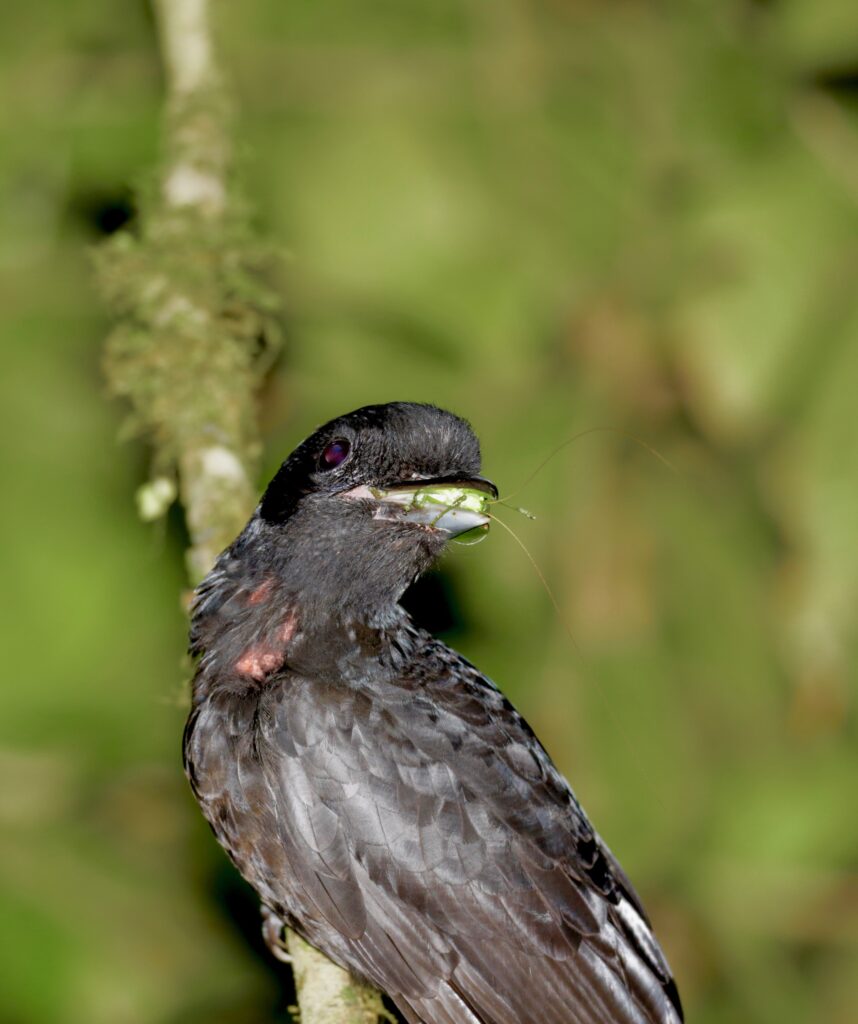
Females also display small tassel feather similar to males but these are rarely seen by the casual observer.
Both males and females will aggressively smack large prey items repeatedly against a branch to subdue their prey or to remove spines from caterpillars.
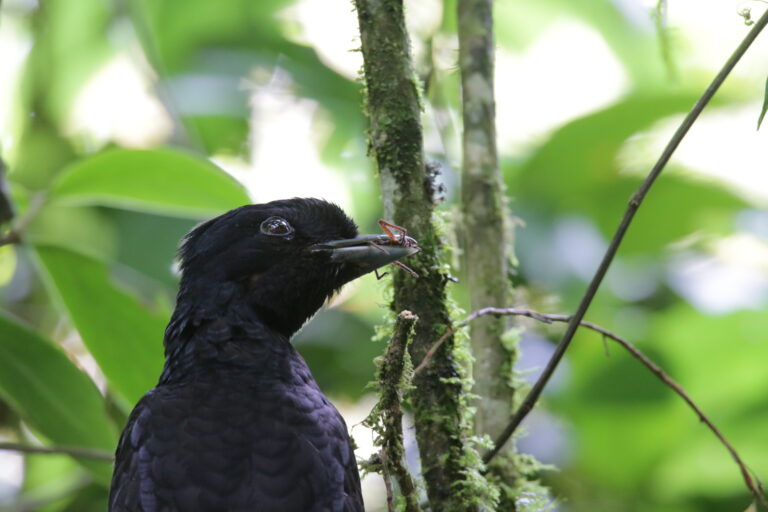
Insects from the family Tettigoniidae (katydid) are a common food item.
This female clearly shows the red throat patch and tassel feathers. This often confuses observers into thinking they are viewing a young male.
Fruits of the avocado family make up a large part of the adult umbrellabird

Get in Touch with UCAN

(+33) 7 80 00 08 09

rarebirdsanctuary@gmail.com

Translate »